


















Sustainable Souvenirs From India That Support Local Artisans

Sustainable Souvenirs From India That Support Local Artisans

Shopping thoughtfully in India is rewarding. The country’s craft traditions thrive in markets, workshops, and small studios, and many travelers look for items that are enjoyable to buy and use. Choosing sustainable souvenirs makes this easy. Hand-loomed textiles and recycled-glass jewelry are great options that help the environment, support traditional skills, and provide direct income to artisans and their communities.

Why Choose Sustainable Souvenirs For Your Trip

Sustainable souvenirs come with a story you can feel good about. Your money supports people and groups who keep traditional skills alive, like dyeing, weaving, bead-making, and metalwork. These items use low-impact materials and are made in small batches, so they have a smaller environmental footprint than mass-produced imports.

When you buy with purpose, a souvenir becomes a real connection to the place you visited. Wearing a scarf throughout the year or packing glass earrings for trips keeps your travel memories alive. This also supports responsible tourism by helping sustain local livelihoods, encouraging skills to be passed on, and showing there is demand for quality goods.

If mindful consumption guides your travel, India offers plenty of choice. Look for co-operatives, artisan-led stalls and verified craft fairs. Ask simple questions about fibre, dye and origin, and choose one or two items you know you will use often.

Hand-Loomed Textiles as Sustainable Souvenirs

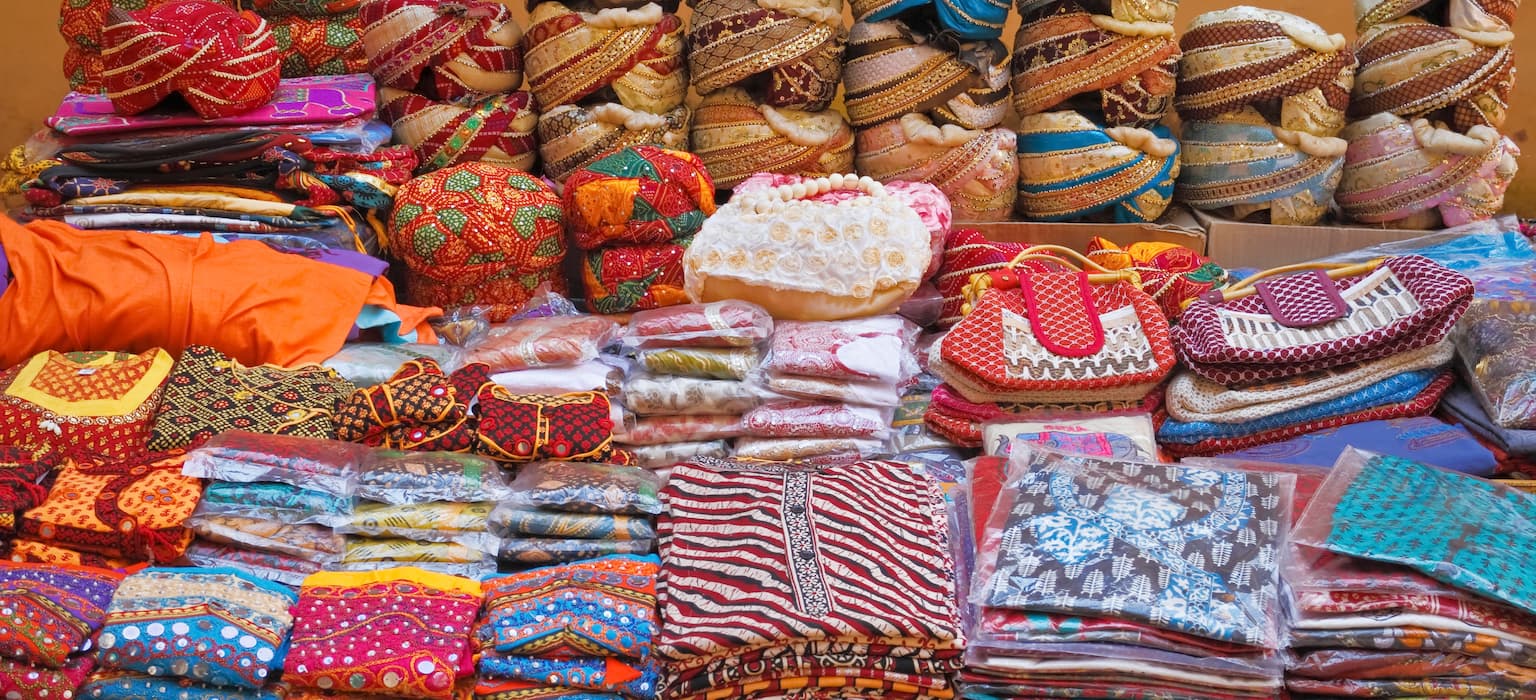
Hand-loomed textiles are central to India’s craft economy. You’ll find handwoven sarees, dupattas, scarves, towels, throws, and table linens made from cotton, linen, and silk blends. Many of these use local fibers and natural or low-impact dyes, and the weaving is done by hand, not machines. This usually means less energy is used and production happens closer to where the fibers are grown.

Every region in India has its own patterns and textures. Near Chennai, Kanchipuram weavers make beautiful silks. In Telangana and Odisha, you’ll find ikat, where threads are tied and dyed before weaving to create sharp designs. Gujarat and Rajasthan are known for block prints like Ajrakh and Bagru, made by hand with carved wooden blocks. In the northeast, Eri silk is soft and matte, offering a unique style. You don’t need to be an expert to choose well; just feel the fabric, look for neat joins on the back, and ask who made it.

Textiles are easy to pack and get better with use. A cotton scarf can be a sun cover, a pillow on the train, or even a curtain tie. Lightweight gamcha towels dry quickly in humid weather and are easy to pack. Table linens can brighten your breakfasts at home. Repairs are simple, and most items can be washed gently with mild detergent. If you get care instructions, keep them with your travel notes.

When comparing prices, keep in mind that most of the cost comes from the time spent weaving by hand. Bargaining too hard can lower rates for everyone involved. Paying a fair price helps weavers keep their craft alive and train new apprentices. If you’re unsure about prices, check state-run emporiums or recognized co-ops for guidance.

Recycled-Glass Jewellery as a Green Souvenir

Recycled-glass jewelry brings color and shine without using new materials. Artisans in places like Firozabad and across Rajasthan and Gujarat melt down old bottles and glass scraps, then shape or press them into beads and pendants by hand. The finished pieces range from soft sea-glass shades to bright jewel colors, often with small bubbles that show their recycled origin.

This method helps reduce waste and uses less energy than making glass from scratch. It also supports small workshops that can try out new shapes and finishes. You’ll find simple necklaces, studs, drop earrings, and bangles with brass or silver. Check for smooth edges, even color, and secure clasps. If you have sensitive skin, ask if the metal parts are nickel free.

Packaging can be eco-friendly as well. Many artisans use recycled paper boxes or cotton pouches. If you’re offered plastic, ask for paper or put the jewelry straight into your own travel pouch. Jewelry is lightweight, doesn’t crease, and makes a thoughtful gift with a clear story behind it.

Supporting Local Artisans Through Sustainable Purchases

When you buy directly or through trusted groups, more of your money goes to the maker. Paying fair prices helps families plan, improve their tools, and invest in safer workspaces. Regular orders provide steady income even outside festival seasons, and support from visitors encourages young people to continue these crafts. In many areas, women’s self-help groups run weaving and embroidery workshops, offering flexible work close to home and opening up opportunities for more people.

The benefits go beyond just the artisans. When workshops are busy, other trades like dyers, block carvers, thread winders, and tool repairers also get work. Traditional skills find new life in modern designs, helping them stay important. As a traveller, you can support this simply by choosing what and how you buy.

A few simple habits can make responsible shopping easier. Choose quality over quantity. Ask for the maker’s name or group and write it down. If bargaining is common, keep it friendly and brief, and agree on a fair price that benefits both parties. Bring a small cloth bag to avoid extra packaging. If you’re shipping larger items, use a trusted service and make sure the maker is fully paid before shipping.

Shop Mindfully, Stay Thoughtfully

Your choice of accommodation can also reflect your values. Places with eco-friendly features like efficient lighting, water-saving fixtures, and recycling help lower your impact. Staying near craft districts and markets saves travel time, giving you more chances to meet artisans and less time spent in traffic.

In Chennai, Somerset Greenways Chennai puts you close to textiles and crafts worth bringing home, from handwoven silks to light cottons. The city’s fabric streets and long-standing stores make it easy to compare options, and you can take day trips to weaving centres to see workshops firsthand. In Bengaluru, Oakwood Residence Whitefield Bangalore is a peaceful base for exploring boutiques and craft fairs, where you can meet artisans and find both recycled-glass jewellery and handwoven items.

If you want your whole trip to reflect care for people and the environment, pick places to stay that share these values. Somerset Greenways Chennai and Oakwood Residence Whitefield Bangalore are good options for thoughtful travellers. Plan a market walk or studio visit between meals and museum stops. You can also join the ASR program for member benefits: Sign Up Here.

Tags: Travel Tips
Help

May I assist you?

Please wait a moment. We are currently processing your request.